Torn Achilles tendon during professional gymnastics
Olympic athlete Elisabeth Seitz suffered a serious injury and had to undergo Achilles tendon surgery
Pictures: Tom Weller, 24passion Media GmbH
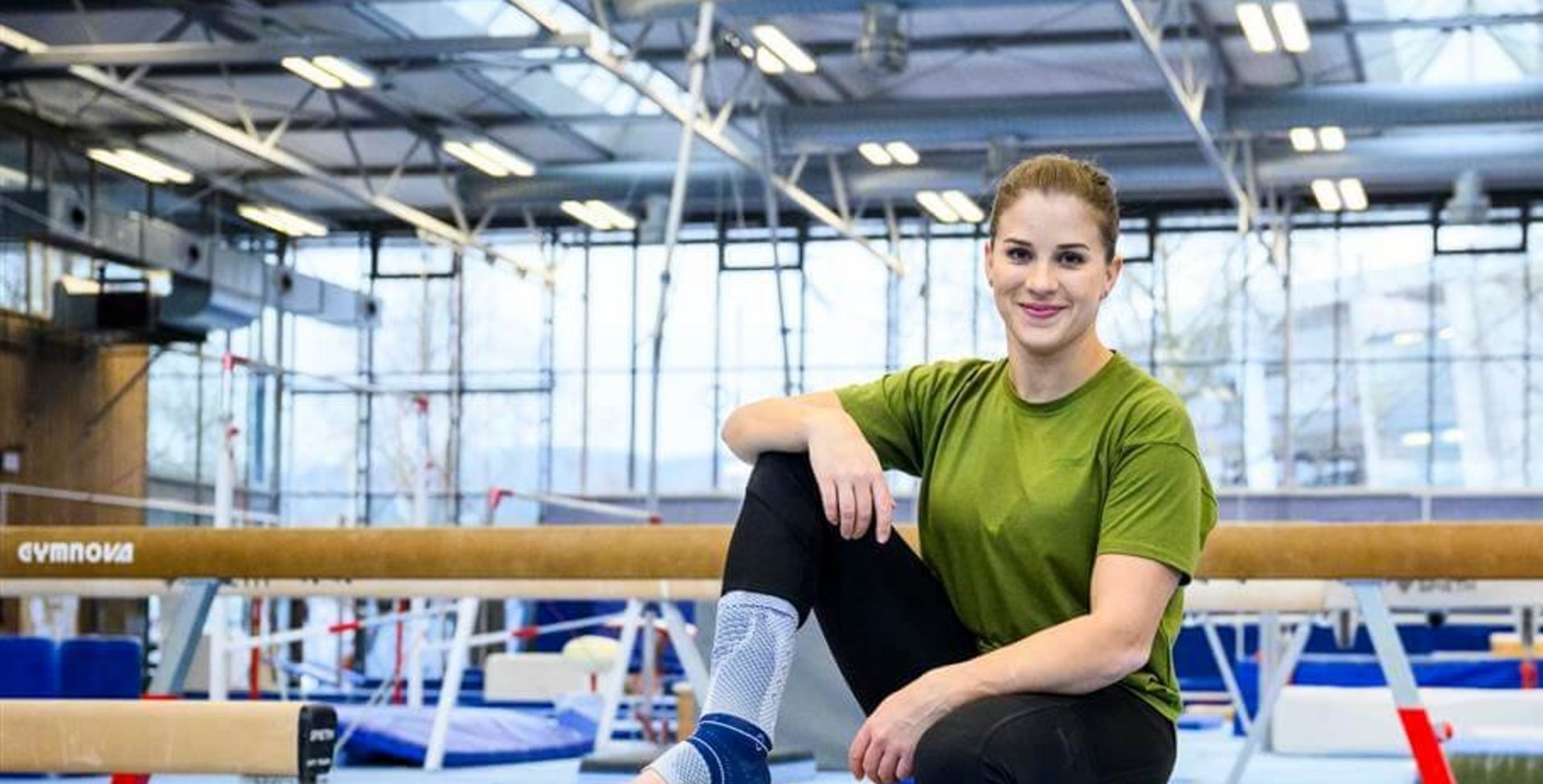
Elisabeth Seitz is one of Germany’s elite gymnasts. She had high hopes for winning a medal at the 2024 Olympic Games in Paris. But a year before the Games, the record holder suffered a serious injury during training. Diagnosis: a torn Achilles tendon. Find out how Elisabeth fought her way back to training after her surgery, and what sporting goals she has now.
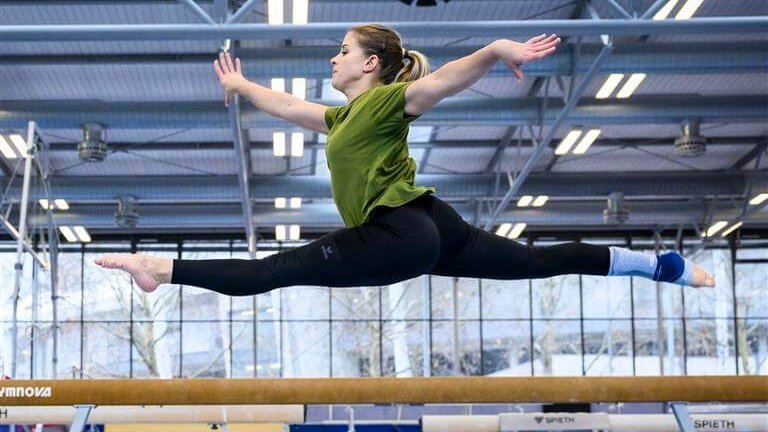
German record holder with 25 championship titles, European Champion on the uneven bars, three-time Olympic athlete: at the age of 29, Elisabeth Seitz has had impressive athletic success. In the summer of 2023, she had her sights set on her next major goal: the 2024 Olympic Games in Paris. The elite athlete had been training for this for 30 hours over six days a week.
Fully focused on the Olympic Games
The 2023 World Championships in Antwerp were designed to pave the way. It was the most important competition for the Olympic team qualification. “I wanted to compete in all four disciplines to support the team with all I’ve got,” Elisabeth reports. “Vault, uneven bars, floor, beam – I had a hot streak and was getting ready for the competition so the team could qualify for Paris.”
Serious injury during training
Right in the middle of the preparations, she had an accident. Elisabeth was practicing a double twist on the floor. “On takeoff, I heard an incredibly loud snapping sound, and I felt that something had torn in my foot,” she remembers. “I was lying on the floor and started to cry. I said to my coach: ‘My Achilles tendon has torn.’”
Elisabeth’s reaction immediately told her coach that it was serious. Elisabeth was taken to Stuttgart Sports Clinic. Her suspicion was quickly confirmed: a torn Achilles tendon.
Achilles tendon surgery
The physicians recommended foot surgery as soon as possible. Elisabeth chose Heidelberg to undergo surgery. “I knew a physician there who has performed foot surgery on me four times, and who I trust very much,” Elisabeth explains. “I wanted to be in a familiar environment. Plus, my family lives in the area.”
Everything happened very quickly: on the day after the accident, Elisabeth had her pre-op appointment in Heidelberg. She had surgery on the following day. Two days later, she was discharged from hospital – and one week after surgery, she was back at the gym for strength training.
Starting rehab with an orthosis
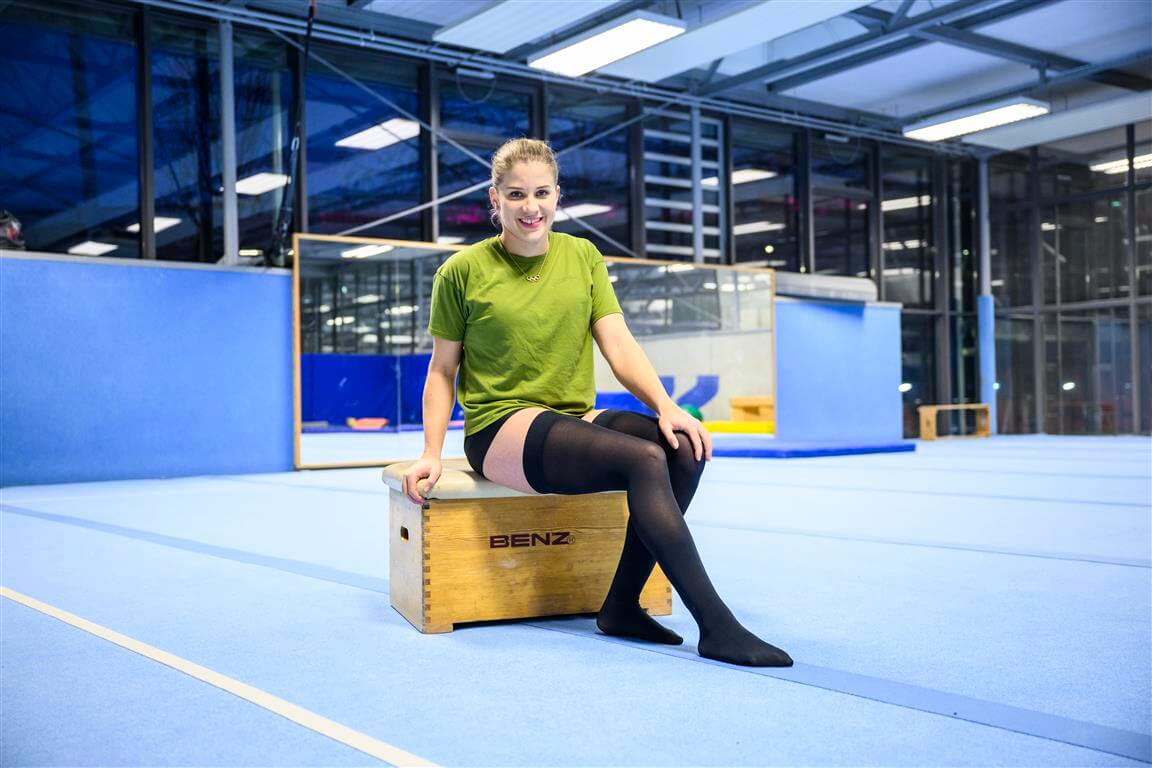
Regular training was completely out of the question at that point, but Elisabeth wanted to do gentle upper body exercises at least. After the surgery, her injured foot had to remain in a heavy orthosis boot that secured the foot in a stable position.
“I then started a proper rehab marathon,” Elisabeth reports. “I had about two hours of physiotherapy every day, and I also added some upper body strength training.” In addition, Bauerfeind’s medical compression stockings supported Elisabeth during this time to promote the work of the veins while she couldn’t be as active.
Progress during rehab with a support
Elisabeth wore the orthosis for a total of eight weeks until she was allowed to start walking slowly when accompanied by her physical therapist. “In the meantime, I always tried to activate my calf in the hope that the muscles wouldn’t atrophy too much,” Elisabeth explains. “But when I took off the orthosis boot, there wasn’t much left – it happened so quickly that my muscles had atrophied, from the thigh right down to the sole of my foot.”
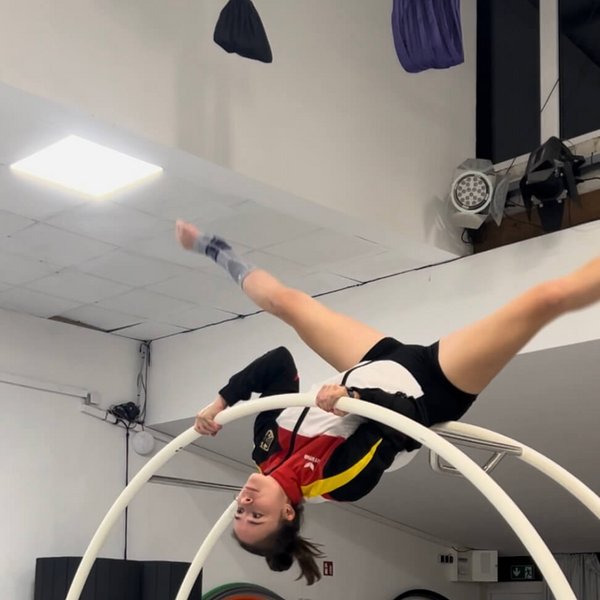
In order to provide the foot with sufficient protection without the orthosis, Elisabeth started wearing an AchilloTrain support. “It was really important for me to have support that wouldn’t completely restrict me,” Elisabeth emphasizes. “After all, I needed to move so I could return to my normal life.”
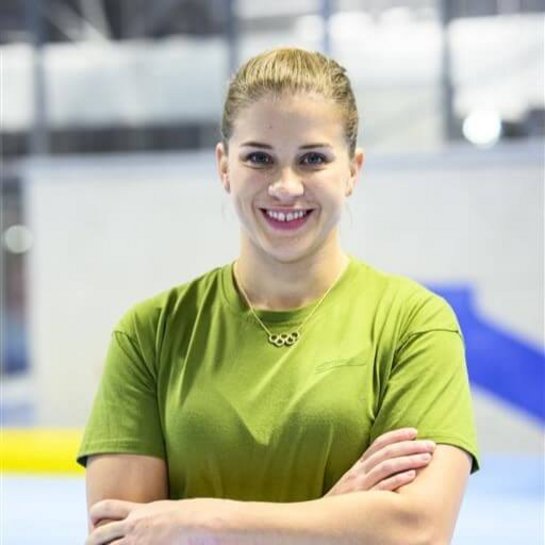
The AchilloTrain helped me build trust in my body, and it still helps me every day during training.
Elisabeth Seitz
Regaining trust
The muscles had to be redeveloped gradually without subjecting the tendon to too much strain. “This balancing act was really tough,” Elisabeth remembers. “I knew that I had to put more effort into it if I wanted to make it to the Olympic Games. But I realized at the same time that something could go wrong if I tried too much. That was a mental challenge as well. I needed patience and trust in my body without being nervous.”
Her body dictated the pace during this process, with her physical therapists supporting and checking her progress. But the training and physiotherapy not only helped her body. “It was the best medicine for my mind as well,” Elisabeth points out. “The exercise distracted me from my mental suffering. Previously, I’ve only had planned surgery to alleviate problems caused by excessive strain, but I’ve never had such a serious injury. I was also aware that I didn’t have that much longer in professional gymnastics at the age of 29 – that meant the injury had an even more significant mental impact.”
Staying positive – despite the injury
Elisabeth’s physician from Heidelberg gave her a lot of encouragement. “He’s a positive thinker who knows how to motivate others,” Elisabeth reports happily. “He said that it was a serious injury but I had nearly a whole year until the Olympic Games. If rehab was going smoothly, it would be possible.”
And the rehab marathon was successful: seven months after the accident, Elisabeth had her big comeback during qualification for the European Championships, winning a bronze medal at the European Gymnastics Championships in Italy. She continues to wear the AchilloTrain even now. “When I wear the support, I don’t feel at all restricted in my movements, but still fully protected,” Elisabeth explains. “This support, together with the high level of wearing comfort, really helped my body.”
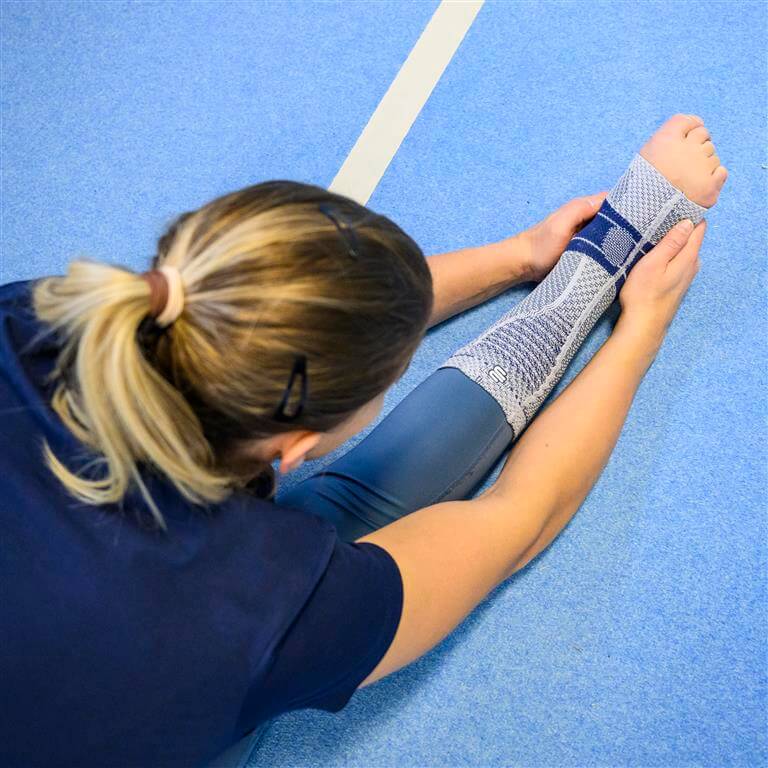
AchilloTrain
Support for relieving the Achilles tendon
In addition to rehab and her support, Elisabeth also has other key help: her environment. “That’s extremely important,” emphasizes the elite gymnast. “Everyone around me was very positive, pointing out that I don’t live and die by my athletic success. That really strengthened and motivated me.”
New sporting goals
And the Olympic Games? Without Elisabeth, the team was not able to qualify so she tried to qualify by herself – managing to rank second. “Unfortunately, there was only one spot,” she says sadly. “The Olympic Games were a big dream. But I knew that I had achieved and experienced so much that life would still go on even without taking part this time.”
In the end, Elisabeth was invited to Paris after all, to be a co-commentator for the TV channel ARD. And her plans for the future? “I’m getting back to training,” she announces proudly. “At the end of May 2025, the European Gymnastics Championships will take place in Leipzig, and I’ll be competing again.”