Achilles tendon surgery
Larissa von Behren was injured during wheel gymnastics but stayed motivated during rehab
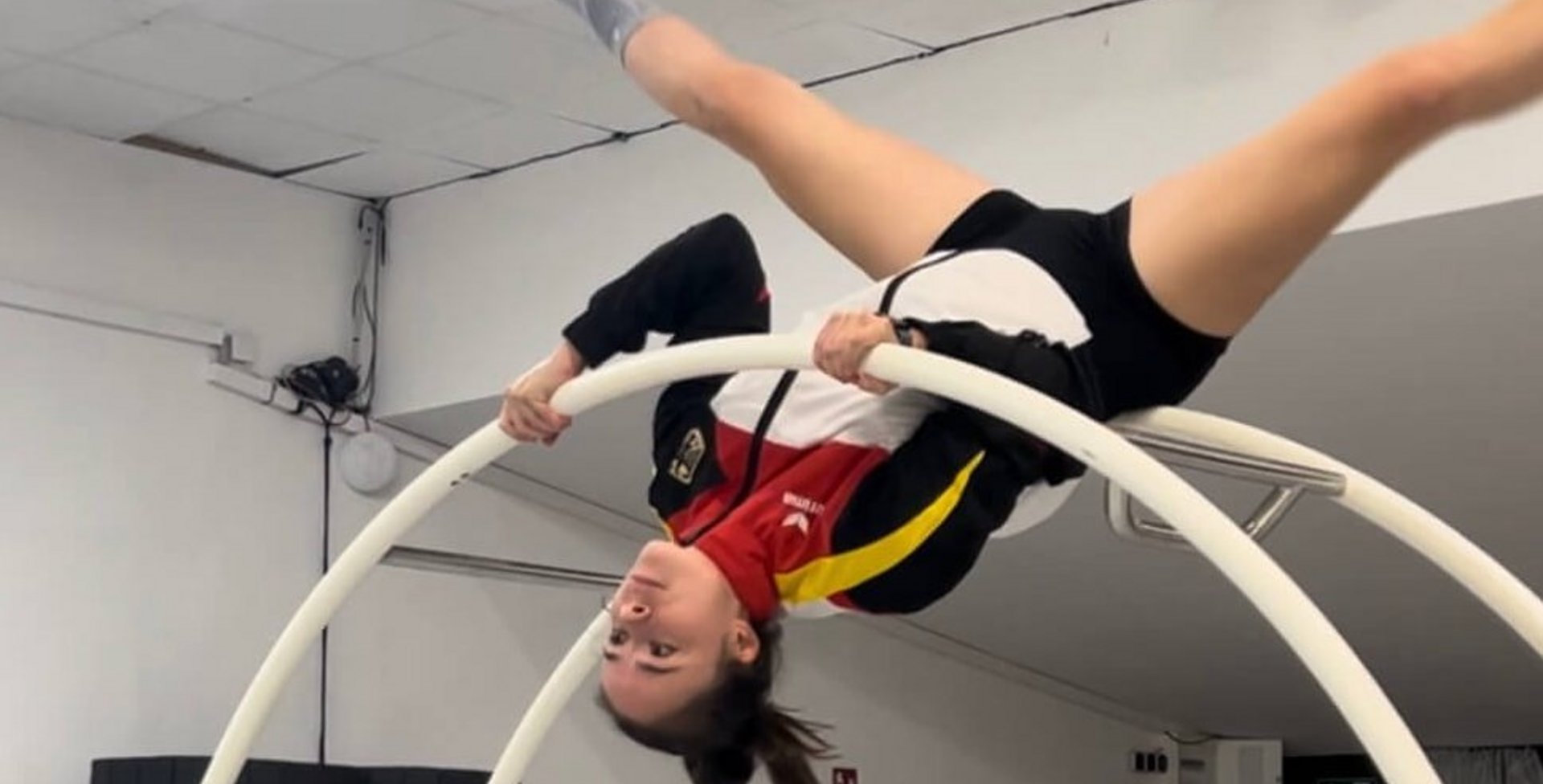
Wheel gymnastics and Cyr wheel are Larissa’s passion. She spent six days a week in the sports hall, training for competitions and looking after upcoming talent. During vacations, too, she always had her wheel with her to spontaneously perform for others. But a sudden injury meant that she had to take a break and be patient during rehab.
14 years ago, a friend talked Larissa into joining her wheel gymnastics training. The two big hoops connected by spokes, handles, and footrests fascinated her from then on, and a hobby turned into true passion. Six years after her first training session, she also discovered Cyr wheel which only consists of one hoop.
Living for the sport
On six days a week, Larissa practiced the different wheel gymnastics disciplines and Cyr wheel exercises, taught children and adults as a coach, and enjoyed success at competitions: she won the North German cup competition in team wheel gymnastics, was two-time German Champion in Cyr wheel, and finally, in 2022, became World Champion.
She also performed at corporate events, during national volleyball and basketball league matches, as well as circus and theater festivals – even in pedestrian precincts. “I’ve always got my wheel with me, like a big heavy handbag,” Larissa reports and laughs. “When I’m traveling in my camper van during the summer, I put on a street show in every town I visit. I just think it’s great fun to entertain people with my wheel.”
Injury during competition preparation
When it came to competitions, Larissa mainly focused on the Cyr wheel. “Then a few changes were made to the wheel gymnastics rules – they suited me,” the 28-year-old explains. “That’s why I decided to enter at national level for individual wheel gymnastics and started to train with great intensity.”
At the beginning of June, Larissa wanted to prove herself at a minor competition. But while warming up, it happened: Larissa jumped off and noticed even in the air that something had gone wrong. “There was an almighty snapping sound and the whole tension was gone from my left foot,” she remembers. “I thought immediately that my Achilles tendon was torn.” She managed to land without subjecting the injured foot to further strain, she immediately asked for a cool pad, and to be taken to hospital. Her suspicion was confirmed straight away: a ruptured Achilles tendon.
Surgery as the only option
Larissa went to see her orthopedist the very next day. She was told that conservative treatment wasn’t an option because the tendon ends were too far apart. A week after the accident, Larissa underwent surgery. “After that, I had to wear a big orthosis boot,” Larissa reports. In this orthosis, her foot was secured in a stretched position, with the angle being adjusted over time.
Rehab and patience
Initially, rehab focused mainly on lymphatic drainage. Larissa then started to have physiotherapy two to three times a week and visited the affiliated gym. At home, she carried out gentle foot exercises. “I had injuries in the past but I was usually able to train again after one or two weeks,” Larissa says. “It was tough being so restricted in my movements and not being able to do what makes me special.”
Her friends and family represented an important mental support. They cared for her and, with food, Lego, and other distractions, helped her remain patient. Another key factor was her physical therapist: “He kept telling me that we will manage it together,” Larissa remembers. “This confidence of being able to make a comeback was essential. My trust in my body also returned gradually. That’s a great feeling and it’s important.”
Support during the healing process
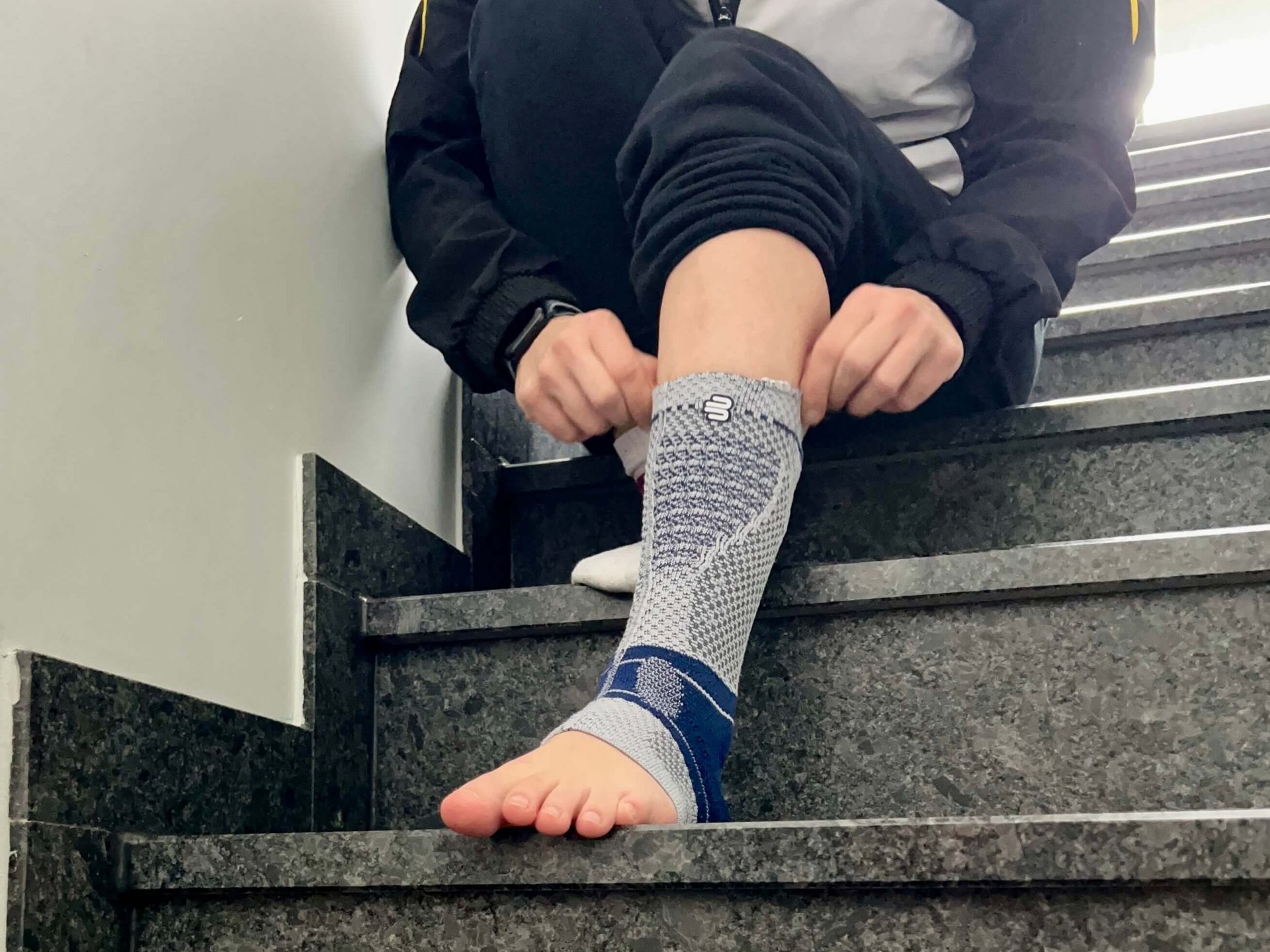
About two months after the surgery, Larissa was allowed to temporarily take off the orthosis and subject her foot to mild strain. But not completely without any support: when Larissa wasn’t wearing the orthosis, she put on an AchilloTrain® support.
Larissa was already familiar with this medical product. “My physician prescribed the support once when I had Achilles tendon inflammation on the other foot,” the athlete reports. “I’ve used various medical aids from Bauerfeind for other injuries and have always been very happy with them, compared to other products in particular. They fit perfectly, and because I can wear the support in my sneakers, I can use it during everyday activities without compromising.”
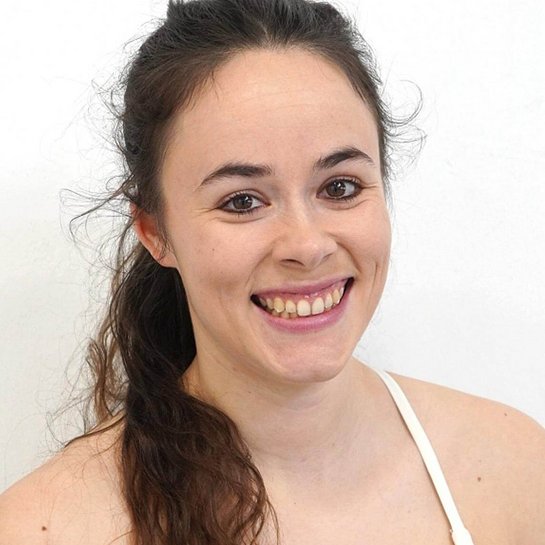
You’ve always got something to support you.
Larissa von Behren
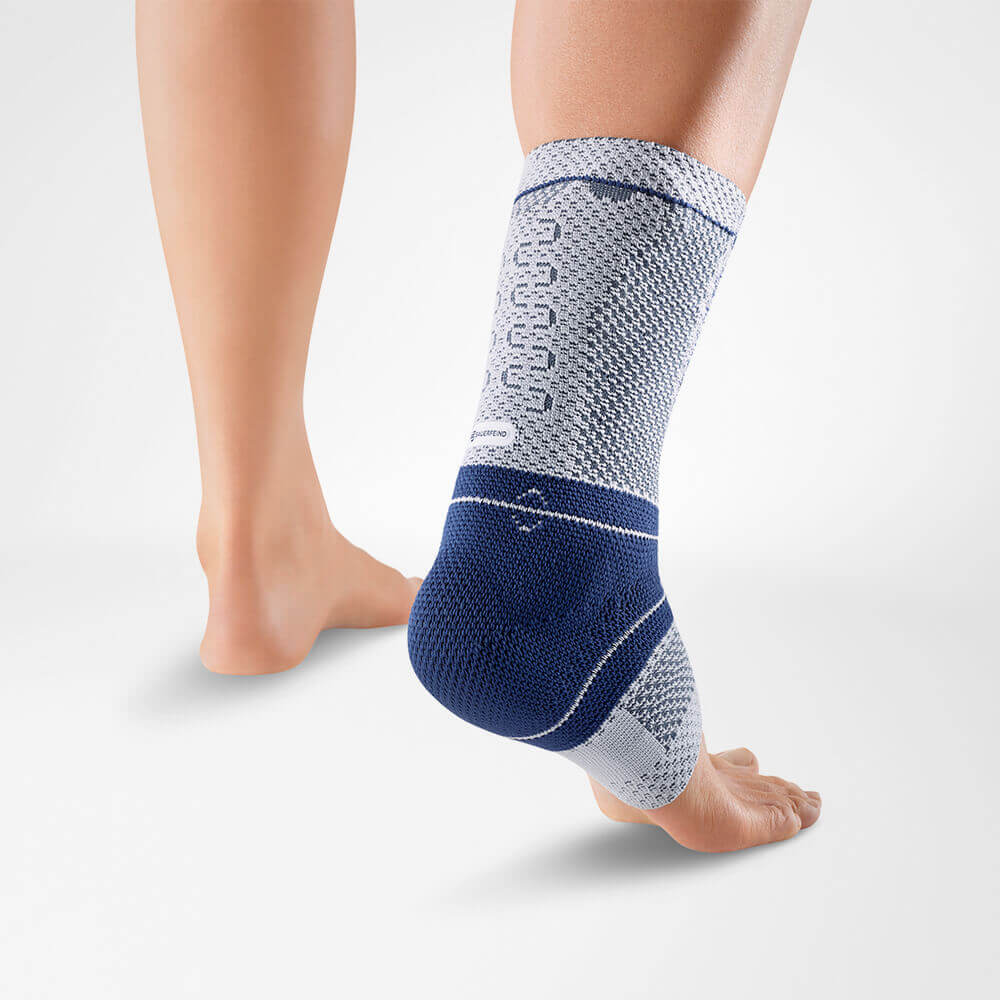
AchilloTrain®: back to the action with a support
But Larissa had to be patient before she was allowed to get back to it. The tendon has healed completely, but twelve weeks of wearing the orthosis had consequences. “My leg was always surrounded all the way up to the knee. So when I took off the orthosis, my leg felt naked and I didn’t really trust my body,” Larissa points out. “Thanks to the support, I have the required stability, but also freedom. It takes the pressure off the Achilles tendon as well as the scar, and it massages the surrounding tissue. This gave me a pleasant sensation between taking the pressure off yet offering stability and confidence to put my foot down.”
AchilloTrain
Support for relieving the Achilles tendon
Even though Larissa still spends most of her time in the orthosis, she puts on her support once a day. “I also use the wedges to raise my heel when I don’t wear shoes because that’s the only way I’m allowed to put my foot down at the moment,” Larissa explains. “I’m really looking forward to using the AchilloTrain® only.”
She has now returned to the sports hall and works as a coach for ten hours per week, sitting on the sidelines. It will probably take until next year for her to resume her activities. “That’s a pretty poor outlook for an elite athlete,” Larissa comments. “But I believe it’s really important to find the motivation and willpower to get back to where you were before. My confidence that I will be able to return keeps me going – luckily I have the right support to make it.”
You might also be interested in this
Achilles tendon rupture during professional sports
Card subtitle
Elite gymnast Elisabeth Seitz suffered an Achilles tendon tear while preparing for the Olympic Games. Find out how a support helped Elisabeth fight her way back to competing.